| Time | Session title | Stream |
|---|---|---|
Automating hot-end through physics-AI digital twins: can we increase yield while reducing costs?The current structural crisis of our market is biting margins due to the combined pressure of energy costs, inflation and macrotrends in global drinking habits. Investments are frozen and production is being resized worldwide. However, although reducing production is a matter of short-term survival, the mid-to-long term life of the glass industry can only be sustained by structured optimization of how we make glass products. Optimization at the Hot End can occur, e.g. (i) by improving glass conditioning in the forehearth while reducing energy consumption, reducing dependency on energy cost volatility; (ii) by reducing downtimes during job changes, improving flexibility in a market demanding make-to-order approach; (iii) by continuously controlling and adjusting the process, reducing defects in the final container; (iv) by improving predictability and inspectability of process and machinery, allowing issues to be prevented ahead of time. Physics-AI Digital Twins enable this in a structured, safe and reliable way. We present evidence of this breakthrough from conditioning to blowing, proving double-digit impact. SpeakerFederico MonegagliaR&D ManagerGlassform.ai
Glassform.ai |
Conference | |
Advanced digitalisation in inspection for predictive defect detectionGlass manufacturing is evolving rapidly, driven by digitalization, decarbonization, and increasing efficiency demands. At IRIS Inspection Machines, we leverage:
Modern inspection systems act as connected sensors, delivering real-time production data—from defect detection to quality metrics. Our AI-powered assistant analyzes this data continuously, uncovering hidden patterns, optimizing machine settings, and enabling early defect detection. By identifying defect origins and tracking process variations, we help prevent performance losses before they occur. Data-driven insights for smarter, more sustainable glass production. SpeakerArmando Enrico BrusamolinoArea Sales ManagerIris Inspection Machines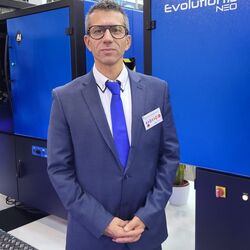
Iris Inspection Machines |
Conference | |
Lunch |
Conference | |
System intelligence through collaborationFor granting quality to their customers, the container glass industry relies on inspection tools, at first mainly in the cold end, since 2000 also in the hot end. These tools are essential but ultimately only reactive safeguards identifying defective containers after they are formed. Drawing on 25 years of experience with hot end image processing and glass manufacturing, this paper argues that the industry is poised for a far more transformative shift. While inspection remains a critical application, our work demonstrates that the true potential lies upstream: in understanding the root causes of defects, enabling real‑time process control, and reducing operator dependency in the hot end. Through decades of field deployment and continuous research, we have developed systems that not only detect anomalies but also interpret them in the context of forming dynamics, machine behavior, and environmental variation. These insights reveal a persistent imbalance: glass makers overwhelmingly invest in end‑of‑line rejection, while the actionable intelligence required for defect prevention remains underutilized. As a result, significant opportunities for efficiency gains, productivity improvements, and lightweighting remain unrealized. Our findings show that AI‑driven forming process control can substantially reduce defect generation, stabilize production, and support less operator‑dependent workflows. Yet the adoption of such capabilities is constrained not by technological readiness but by organizational and cultural inertia. Incremental upgrades to inspection systems alone will not reshape the industry; what is needed is a shift toward integrated, data‑driven manufacturing strategies. This paper therefore calls for deeper collaboration between technology providers and glass manufacturers. By forming true partnerships—where insights, data, and long‑term objectives are shared—we can accelerate the transition from reactive quality selection to proactive quality control and intelligent production. The potential impact is profound: fewer defects, lighter containers, more consistent quality, less operator dependency and a more resilient, future‑ready glass industry. SpeakerPaul SchreudersCEOXpar Vision
Paul Schreuders, since March 1 2026 non-executive board member of XPAR Vision. Until then almost 20 years CEO of the same company, thus 20 years of experience in the field of developing and applying sensing and robotics technology in the forming area of container glass industry. 62 years young now, married and father of 4 healthy boys. Xpar Vision |
Conference | |
Batch house: the best learnings from practicesShanghai Precision has learnt a lot from the batch plants they have designed and supplied for glass industry worldwide in past few years and the managing director would like to share the learnings from design, fabrication and construction of batch plant and hope to deliver a better plant in future practices. SpeakerHarry ShaManaging DirectorShanghai Precision Dosing and Weighing System Co., Ltd.
Shanghai Precision Dosing and Weighing System Co., Ltd. |
Conference | |
How to save money and extend furnace lifetime: advantages of a periodic anamnesis of glass furnaces.The thermal balance of a glass furnace is a key tool for understanding and optimizing energy use in high-temperature processes. Operating above 10 MW, furnaces require accurate evaluation of all energy inputs (fuel, electric boosting, air) and outputs (glass heating, flue losses, reactions, and leakages). This work combines design models with on-site measurements to bridge the gap between theoretical and real performance. The approach enables the identification of inefficiencies and supports targeted improvements. Periodic thermal balance analysis can significantly reduce energy consumption, emissions, and operating costs while improving furnace lifetime and stability. SpeakerGiorgio MinestriniChief Project OfficerStara Glass
Born in Genova in 1983, Mr Minestrini has been working for 12 years in glass industry. He deals with mathematical modelling, computing, design, special & innovative technologies design, installation and operation. He is a heat balance detection and computing specialist. Mr Minestrini is the author of numerous technical papers and has spoken at many scientific conferences, winning the Michael Garvey award in 2018 with a paper about the Prime Glass project. He is also an expert Project Manager, and is involved in customer support and dissemination activities. Additionally, he is responsible for internal training in the company and external training at the University of Genova. Stara Glass |
Conference | |
Decarbonising glass forming: synergistic advances in oxy-gas combustion and electric forehearth technologies.The glass industry faces increasing pressure to decarbonize its forming processes. This work presents two strategic solutions for distributors and forehearths: Oxy-Gas combustion and electric heating. While Oxy-Gas technology significantly reduces fuel consumption and emissions (up to 60%), the electric solution enables carbon-neutral production by eliminating direct emissions. Supported by CFD analysis and economic data, both systems ensure high thermal stability, superior glass quality, and substantial operational savings. Together, these technologies provide a concrete roadmap toward sustainable, climate-neutral glass production by overcoming the efficiency limits of traditional air-gas systems. SpeakerEmanuele DonatiSales ManagerGlass Services Italy
Glass Services Italy |
Conference | |
Decarbonising the glass industry by using waste flue gases: the case of self-produced electricity in a hollow glass manufacturing plant in Italy.Achieving net zero emissions by 2050 requires major efficiency improvements across energy intensive industries, and waste heat recovery (WHR) is becoming a crucial decarbonization pathway. Europe currently leads WHR adoption thanks to strict efficiency policies and carbon pricing measures, while North and Latin America also present strong potential through EPA programs and national regulations. One of the most effective ways to utilize waste heat is on site electricity generation using and Organic Rankine Cycle (ORC) turbine. An Italian hollow glass plant demonstrates this by installing a 1 MW ORC turbine powered by our gas-to-oil heat exchanger and high temperature ceramic candle filter, improving overall furnace efficiency, reducing emissions, and delivering substantial annual energy cost savings. SpeakerGiorgio Di LascioSales ManagerK2-CO2
K2-CO2 |
Conference | |
Maintaining process stability in glass forming: Managing friction under operational pressureGlass forming operations are increasingly exposed to tighter operating conditions, where stability becomes critical to maintaining performance and quality. In these environments, friction at the interface between hot glass and forming equipment is often treated as a secondary variable, despite its direct impact on process consistency, defect rates and equipment wear. This presentation explores how friction can be approached as a controlled parameter within forming operations, drawing from field experience to illustrate its role in maintaining stable production conditions under operational pressure. SpeakerManuel PatracaTechnical ConsultantInterglass
Interglass SpeakerAldo ChanónStrategy CoordinatorInterlub Group
Interlub Group |
Conference |
| Time | Session title | Stream |
|---|---|---|
Closing the loop: industrial recycling of high-alumina refractories in the Mexican glass industry.This session will present the industrial development of high-recycled refractory materials within the Mexican glass industry. Refractarios Especiales León, founded by a chemical engineer from ESIQIE-IPN to support the Mexican glass industry, has long explored practical ways to incorporate recycled refractory materials into industrial production. In 2020, global uncertainty during the COVID-19 pandemic and limited raw-material inventories accelerated efforts to recycle production returns directly into new refractory pieces. Unlike common industry practice, where recycled refractories are typically downgraded into secondary materials, this project explores the reuse of refractory returns in high-performance products. The discussion will address the milling strategy, the environmental implications, and the ongoing industrial trials that are paving the way toward broader technical validation. In a discussion moderated by Dr. Heberto Balmori-Ramírez, Instituto Politécnico Nacional (IPN), ESIQIE – Department of Metallurgical and Materials Engineering SpeakerGloria Oswelia León ÁlvarezFounder and General DirectorRefractarios Especiales León
Refractarios Especiales León SpeakerMiguel Ángel Espinosa LeónSales ManagerRefractarios Especiales LeónRefractarios Especiales León |
Conference | |
Blankontrol: from 6 to 2 months ROI – how precise blank temperature control unlocks safe lightweighting and maximum productivity.In Mexico's competitive container glass market, where yield, defect reduction, and fast payback are critical, TME Engineering’s Blankontrol delivers outstanding results. By providing real-time, non-contact temperature measurement of blanks and plungers with ±2°C accuracy, Blankontrol ensures homogeneous glass distribution at the blank side. Without lightweighting, the typical ROI is reached in 6 months, thanks to reduced thermal defects, faster start-ups, and improved process stability. When enabling safe lightweighting, the same system accelerates ROI to just 2 months through significant savings in glass, energy, and transportation costs, while maintaining or improving bottle strength and line efficiency. Drawing from industrial deployments, this presentation shares concrete process data and quantifies Blankontrol’s combined impact on yield and profitability for Latin American plants. SpeakerRaphaël MalvezinCEOTME Engineering
TME Engineering |
Conference | |
From fire to insight: AI transforming glass furnace operations with NIRB technology.SpeakerPhilippe KerboisGlobal Industry ManagerAMETEK Land
Philippe has extensive sales and project management experience from working in the steel, glass and automotive industries including Rockwell Automation and ABB where he was specifically involved in major robot-based factory automation projects. Having worked at AMETEK Land since 2012, Philippe initially managed the sales of infrared temperature measurement solutions into line builders and glass, steel furnace OEMs, now he works very closely with the global glass market and is actively promoting the award-winning Near Infrared Borescope (NIR-B) Glass thermal imaging solution for optimisation of glass furnaces. AMETEK Land |
Conference | |
Pressure points: hidden savings in pneumatic solutions.SpeakerAndrés Marcelo Gómez RamonesLatin America Area Sales ManagerPneumofore
Andrés represents Pneumofore in Latin America, where he guides industrial clients through the selection and implementation of advanced vacuum and compressed air technologies. With an engineering mindset and a business-driven approach, he focuses on aligning plant utility systems with long-term efficiency, uptime, and performance. His work has spanned in glass plants, can factories, packaging, and heavy industry - helping facilities across the region modernize their infrastructure through high-value, low-maintenance systems. Pneumofore |
Conference | |
Supporting Glass Melting Sustainability with Refractory InnovationGlass manufacturers have traditionally aimed at energy optimization due to the melting process intense energy requirement nature. In recent years, CO2 reduction has gained importance and adds complexity to the manufacturer´s objectives. In this paper two state-of-the-art lining concepts offered by RHI Magnesita will be described as alternatives that contribute directly towards glass melting sustainability. The INNOREG regenerator concept is a proven tool that offers a customized design aligned to the specific furnace requirements. Recent high-efficiency checker shape developments provide new possibilities to optimize the regenerator layout. The second concept, emissivity-enhanced silica crowns, has on its core the honeycomb shape, which outperforms the traditional flat hot face due to the increased heat exchange area and emissivity coefficient. SpeakerIgnacio Ramírez LozanoTechnical Marketing ManagerRHI Magnesita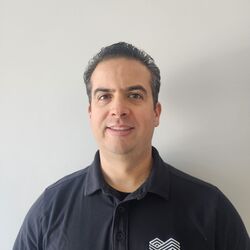
RHI Magnesita |
Conference |

JOIN OUR MAILING LIST
Be the first to hear about exhibitors, speakers and what's on at our upcoming events.