| Time | Session title | Stream |
|---|---|---|
A look ahead to the future of glass industry through the innovation of plant infrastructure.SpeakerFrancesco ProsperiTechnical DirectorFalorni Tech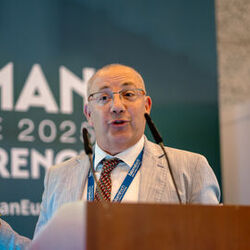
Falorni Tech |
Conference | |
SUGAR: the main course is about to be served at VeMe’s Furnace 3SpeakerGiorgio MinestriniChief Project OfficerStara Glass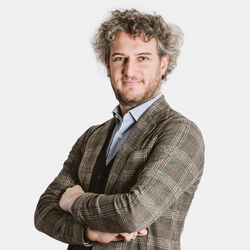
Born in Genova in 1983, Mr Minestrini has been working for 12 years in glass industry. He deals with mathematical modelling, computing, design, special & innovative technologies design, installation and operation. He is a heat balance detection and computing specialist. Mr Minestrini is the author of numerous technical papers and has spoken at many scientific conferences, winning the Michael Garvey award in 2018 with a paper about the Prime Glass project. He is also an expert Project Manager, and is involved in customer support and dissemination activities. Additionally, he is responsible for internal training in the company and external training at the University of Genova. Stara Glass |
Conference | |
What matters in hollow glass production.This analysis highlights the key success factors in hollow glass manufacturing, showing how large-scale producers can overcome common operational challenges, enhance process stability, and consistently achieve high quality, energy efficiency and cost savings targets. SpeakerMonica D'AlessioArea Sales ManagerPneumofore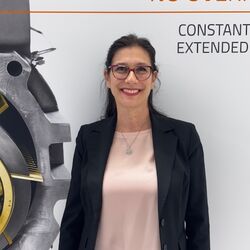
Pneumofore |
Conference | |
Oxy gas forehearths for CO2 reduction in glass formingSpeakerEmanuele DonatiSales ManagerGlass Services Italy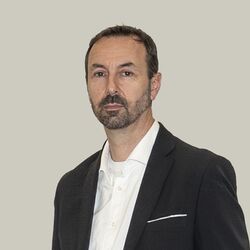
Glass Services Italy SpeakerAndrea BassiSales ManagerGlass Service Italy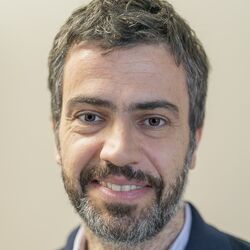
Glass Service Italy |
Conference | |
Electric forehearths for CO2 reduction in glass formingSpeakerEmanuele DonatiSales ManagerGlass Services Italy
Glass Services Italy SpeakerAndrea BassiSales ManagerGlass Service Italy
Glass Service Italy |
Conference | |
BDF Roadmap to decarbonization, electrical forehearth with radiative elements applicationTo abate CO2 emissions, optimizing the glass conditioning is a huge area of opportunity. Forehearth firing systems, known for their low efficiency, typically rely on combustion, often hindered by the absence of preheated air. While oxy-gas combustion offers significant improvement, it's not the ultimate solution. Electric heating, such as submerged electrodes (molybdenum or tin oxide), has proven effective but requires cooling systems, impacting overall efficiency. BDF has developed a solution based on silica-carbide radiative elements. These elements replace the flame from pencil burners, directly radiating heat to the glass. This eliminates contact between the heating elements and the glass, along with the associated heat losses from flue gases. Since radiative elements require no cooling, additional efficiency can be achieved. Each control zone utilizes thyristor controllers to power the elements, with a unique "side-by-side" configuration enabling independent power control on both the left and right sides of the forehearth. This precise control is essential for achieving the high thermal homogeneity required in processes like NNPB. Glass cooling is achieved through refractory dumpers/flaps driven by actuators, allowing for both axial and lateral cooling control. The BDF control system and relevant SCADA integrate heating and cooling regulation. SpeakerAntonino FinarelliTechnical Manager – MeltingBDF Industries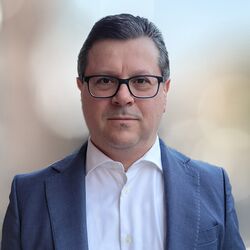
BDF Industries |
Conference | |
Advancing forehearth technology for decarbonisationSpeakerMatthew RiversDevelopment EngineerFives
Fives |
Conference | |
Glass Furnace Model (GFM) – the only software you need to understand your furnace.SpeakerMiroslav PolakProject Manager - Melting Technology DepartmentGlass Service, a.s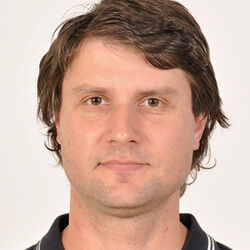
Miroslav Polak is a Project manager - Melting Technology Department, specialising in GFM modeling case studies. Glass Service, a.s |
Conference | |
XeBoost and SEFPRO Guard: a powerful alliance for decarbonisation.Reducing the carbon footprint of the inherently energy-intensive glass making process is a major challenge. It will require a progressive technology transition, starting from incremental improvements of existing technologies, and heading towards groundbreaking innovation in the long term. Hybrid & Electrical furnace technologies are progressively being adopted as the first step along this journey toward decarbonation. Nevertheless, these new technologies bring many technical challenges, refractories behaviour and corrosion in the melting zone being among the most critical ones. In the first part, this presentation will address the improvement of corrosion resistance through XeBOOST™ material installation in the most critical areas. Then, the benefits of SEFPRO GUARD® monitoring system to assess the corrosion profiles of refractory blocks and to correlate them to furnace operating conditions will be highlighted. Finally, the benefits of combining new SEFPRO materials with advanced monitoring technologies will be illustrated through a complete solution approach. SpeakerHugo Hiel-BeraudProject ManagerSEFPRO
SEFPRO |
Conference | |
Reinventing the furnace: innovations to reduce carbon emissions.SpeakerDr Sebastian WoltzSales DirectorSorg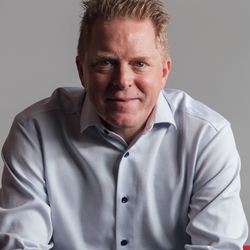
Sorg |
Conference |
| Time | Session title | Stream |
|---|---|---|
KEYNOTE SPEECH - Domestic Glass Sector: opportunities and threats of decarbonisationSpeakerLuca TosiniPresidentEuropean Domestic Glass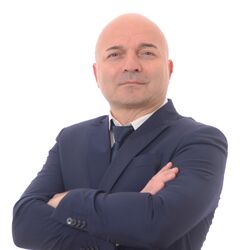
Degree in Industrial Chemistry Luca began his professional career in the glass sector in 2000. Passion and curiosity have allowed him to take on different roles with increasing responsibilities: from Production manager to Furnace manager, from Plant manager to Technical director. He currently holds the role of Strategic Purchasing director at Bormioli Luigi SpA, based in Parma (Italy) In 2021 he began his experience on the Board of the European trade association EDG, based in Brussels, which led him to assume the role of Chariman of ISO TC 166 and currently President of the association. European Domestic Glass |
Conference | |
KEYNOTE SPEECHSpeakerWalter da RizDirectorAssovetro
Degree in Mechanical Engineering
|
Conference | |
Seeing clearly in the transition: the role of NIR-B thermal imaging in hybrid furnaces.As the steel, metals and glass industries accelerate toward decarbonization, the hybrid furnace is emerging as a critical technology — combining traditional fossil-fuel firing with electrical or hydrogen-based heating to cut CO₂ emissions without compromising process performance. But hybridization also brings new challenges: fluctuating temperature zones, unproper heat distribution, and higher demands for repeatable and accurate control. That’s where advanced thermal imaging, particularly MWIR-B and NIR-B (Near-Infrared-B) technology based, is making a real difference for operations. The paper will introduce some case studies how to get benefits from this technology. SpeakerPhilippe KerboisGlobal Industry ManagerAMETEK Land
Philippe has extensive sales and project management experience from working in the steel, glass and automotive industries including Rockwell Automation and ABB where he was specifically involved in major robot-based factory automation projects. Having worked at AMETEK Land since 2012, Philippe initially managed the sales of infrared temperature measurement solutions into line builders and glass, steel furnace OEMs, now he works very closely with the global glass market and is actively promoting the award-winning Near Infrared Borescope (NIR-B) Glass thermal imaging solution for optimisation of glass furnaces. AMETEK Land |
Conference | |
Developments in lightweighting.As the need and desire for packaging to become lighter increases this presentation will discuss some of the developments, opportunities and challenges associated with reducing the weight of glass containers including the sustainability benefits, the need for technical standards to reflect the advancements in this area and key points to consider when planning lightweighting projects. SpeakerDaniel CaponTechnical ManagerGlass Technology Services (GTS)
Glass Technology Services (GTS) |
Conference | |
Low carbon fuels for the glass industry: pilot trials and future opportunities.Glass Futures is a not-for-profit, membership-based, research organisation, based at its Global Centre of Excellence in St Helens, UK. The remit of the organisation is to enable its members from across the glass supply chain and beyond to collaborate in areas which affect all parties, with a particular focus on decarbonisation of the glass-making process and its upstream and downstream activities. At the heart of the new Glass Futures’ facility is a 30 tonnes/day pilot-scale glass furnace, which has been designed to enable the industry to develop and trial new technologies at an industrially relevant scale, without risk to their commercial manufacturing assets, thus providing increased confidence for manufacturers looking to invest in low-carbon technologies such as alternative fuels, CCUS technologies and new raw materials. The first phase of trials to be undertaken on this new pilot line will investigate a range of alternative, low-carbon fuel scenarios for glass furnaces, including hydrogen, biofuels and electric melting. In this paper, an overview of the facility is provided along with an overview of findings from these initial trials into low carbon fuel scenarios. Future opportunities to make switching to low-carbon fuel scenarios more commercially attractive for the glass industry, such as dynamic fuel switching and pyrolysis technologies, will also be explored. SpeakerDr Bridget StewartInnovation & Bid Development LeadGlass Futures
Bridget’s work focuses on connecting industry, academia and government to accelerate the decarbonisation of glass manufacturing and other foundation industries. She has a strong track record of creating and delivering collaborative R&D programmes, helping to secure more than £40 million in grant funding to support the development and industrial demonstration of low-carbon technologies. Her work spans technically creative concept development, pilot-scale trials and scale-up. Previously, Bridget held senior scientific and research leadership roles at the Materials Processing Institute and Tata Steel Research & Development, delivering internationally funded projects to improve efficiency, product quality and environmental performance. Bridget also brings experience from academia as a former Senior Lecturer in Materials Engineering, with a long-standing passion for knowledge sharing and developing people. She holds a PhD in Glass Chemistry and brings a pragmatic, industry-focused approach to innovation Glass Futures |
Conference |

JOIN OUR MAILING LIST
Be the first to hear about exhibitors, speakers and what's on at our upcoming events.