| Time | Session title |
|---|---|
Decarbonization Through AI-Powered Batch Monitoring and Model-Based Predictive Control for Electric and Gas-Fired FurnacesBatch and cullet melting represent the initial stages of the glass melting process. The stability of this process, influenced by factors such as pull, cullet level, glass color, raw material variations, rheological behavior, and the batch charger, is crucial for ensuring optimal glass quality in gas-fired furnaces. The potential instability necessitates continuous 24-hour monitoring and potential corrective control to minimize quality issues. Additionally, the increasing electric boosting levels resulting from the decarbonization process have the capacity to alter glass convection loops, displacing batch downstream in the process. In cold top melting furnaces, the thickness of the batch plays a pivotal role in insulating the hot glass melt and minimizing heat loss. However, variations in pull and cullet can significantly impact batch thickness. Until now, there has been a lack of systems capable of measuring the actual batch thickness or height and incorporating this parameter into automatic model-based predictive furnace control. This paper will present the latest developments and results for both gas-fired and cold top electric smelters. SpeakerErik MuijsenbergCommercial DirectorGlass Service CZ
Erik Muijsenberg is a Mechanical Engineering graduate from the University of Eindhoven, Class of 1990. In the eight years following his graduation, he was employed by TNO Glass group in Eindhoven, where he focused on furnace modeling and glass melt technology. In 1997, he assumed the role of TNO Glass Department leader. In 1998, he took on the position of Managing Director at GLASS SERVICE B.V., marking the establishment of the first GLASS SERVICE subsidiary office in Maastricht, the Netherlands. After eleven years, he relocated to GLASS SERVICE headquarters in the Czech Republic, where he assumed the role of group Vice President. GLASS SERVICE boasts a global presence with over 110 engineers and offices in Czechia, Slovakia, Netherlands, Germany, UK, France, USA, China, and Japan. Notable subsidiaries include FlammaTec, recognized worldwide for combustion systems, and FIC UK, specializing in Electric melting solutions. As of April 2024, Glass Service Group has become part of SEFPRO and Erik was appointed as the Commercial Director. In 1997, Erik was honored with the Otto Schott Award. In 2012, he received the Adolf Dietzel Industry Award from the German Glass Society for his significant contributions to the development and acceptance of glass furnace modeling and optimization in the German glass industry. Recognized as a Fellow member by the British Glass Society in 2014, Erik has actively served as the Vice Chairman and past Chairman of the Technical Committee 21 – Furnace Design & Operations – of the International Commission on Glass (ICG). As of 2016, Erik has been an ICG Steering Committee member. In 2017, he joined the Phoenix Award Committee and, in 2024 he became the Chairman, since 2025, serves as the Past Chairman of the Phoenix Award Committee. In 2023, he was honored with the N.L. Varshneya Memorial Award in Cambridge, UK, the ICG W.E.S. Turner award at the annual ICG Conference in Hangzhou China and finally the FLOGEN von Klitzing (Nobel Laureate) International engineering Award in Panama City, Panama. During the ICG Annual Conference in Korea in August 2024, Erik was elected as the new Vice President of the International Commission on Glass. Erik has been a fervent advocate for Industry 4.0, promoting smarter model-based predictive furnace and forehearth control, as well as Carbon emission reductions in the Glass Industry for over two decades. Glass Service CZ |
|
How to make AI an asset for glass?Artificial Intelligence is present in our everyday life. But what are the main benefits of AI in industry for real needs of glassmakers? Thanks to the standardization of communication protocols on a production line, the interoperability of robots allows an exchange of information. Thanks to deep learning techniques in intelligent inspection robots, it is now possible to anticipate production trends in addition to an accurate detection and categorization of defects. IRIS intelligent solutions can thus increase productivity by highly accurate defect identification, managing the settings optimization and integrating the production trends prediction. Decreasing the dependence on human factor is a key goal of IRIS AI-based strategic developments. SpeakerAlexandre TanAsia Projects and Technical Support ManagerIris Inspection Machines
Iris Inspection Machines |
|
The path to optimal glass bottle manufacturing through automation and digitalisationSince over 95 years Agr International, Inc. is strongly engaged in research and development dedicated to providing solutions that help improve the quality, safety and efficacy of the packaging we are relying on in our daily life. We have seen an evolution in solutions from mechanic to electric then to electronic and computer controlled solutions. The common denominator was however always the need for the operator to set-up the machines according to the requirements as well as the tested glass bottle or jar. With faster processing power and innovative algorithms Agr was able to change the archaic way of measurement set-up to an automatic solution and assisting in reaching sustainability goals with measurement solutions but also in analyzing and optimizing the design of the container. The presentation will feature approaches on Product Sustainability through Lightweighting as well as Process Sustainability through at the Line Monitoring and generation of actionable data as a base for Industry 4.0 and KI. Examples will include financial gains as well as a CO2 reduction through lightweighting and a reduction of Carbon Footprint due to the generation of fast actionable data. SpeakerMartin KüstnerSales Director Asia PacificManaging Director Agr Bangkok Ltd.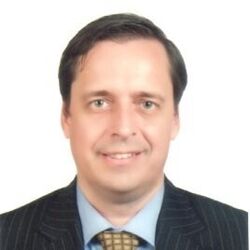
Martin Küstner has been working within the glass, plastic container as well as filling industry for over twenty years. Before moving into this sector, he worked in the fields of Image Processing and Broadcasting Technology as well as in Dynamical Measurement Systems for industrial and medical applications in various companies based in Munich, Germany. While studying economical engineering at University of Applied Sciences in Munich/Germany, he also worked as an intern for Agr International, Inc. USA spending one semester during his studies in the USA. After graduating in 1997 he started working for Dr. Martin Buss & Partner in Munich in the position of Sales & Technical Assistance for equipment required in the Glass container and filling industry. Together with Agr International, Inc. USA, he founded in 1999 a branch of Agr called Agr Europe GmbH in Munich as well as a Service Centre close to Hanover. As part of the additional expansion plans of Agr International into the Asian Market, Martin Küstner did open Agr Bangkok Ltd. In the year 2013 to increase the presence of Agr in the Asian Pacific Market. With this move of Agr into Asia, Martin Küstner did relocate from Munich, Germany to Bangkok, Thailand in 2013. Since then he has been working as Managing Director of Agr Bangkok Ltd. and Director of Sales & Service being responsible for Agr’s operations and services in the Pan Pacific Region. Over the past 25 years, Mr Küstner has advanced his career at Agr while thriving in positions of increasing responsibility. Managing Director Agr Bangkok Ltd. |
|
An all round service offering. SpeakerBarbara AntoniniAntoniniCEO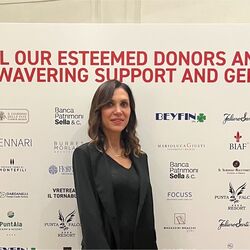
CEO |
|
Focus on the EssentialsReliable and high performing machines are the basis for a modern and highly efficient glass plant. This is essential to remain competitive. With Heye’s many years of knowledge in glassmaking, we offer you a wealth of expertise to achieve this. Comprehensive and preventive maintenance concepts as well as global service network are just one area of our extensive range of services to increase the performance of a glass plant. Whether new equipment or refurbished, modernised equipment, Heye the right partner at your side. SpeakerHans-Peter MüllerCEOHeye International
Heye International |
| Time | Session title |
|---|---|
AI in inspection machines: use cases on productivity gains & detection improvementsTiama now offers high-speed inspection with AI in all its sidewall machines. With its fleet of sidewall machines running with AI, Tiama leverages the throughput and the production quality of plants. Sébastien Ying, VP APAC at Tiama will present some plants’ use cases where its implementation reduced the false reject rate whilst improving the critical defect detection capacity at the same time. You will also understand how the technology can be implemented into existing sidewall machines. SpeakerSébastien YingRegional Vice President APACTiama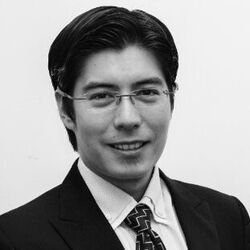
Tiama |
|
Decarbonised technology for the glass industryThe glass industry is energy intensive with high emissions and operating costs. Green solutions are now available to glass manufacturers, including electric and hybrid furnace technology. The choice of technology depends on the project requirement, each option imposing restraints as well as benefits. All-electric melting provides the most energy efficient solution yet cannot be easily applied to some glass types; hybrid furnaces provide greater flexibility at the expense of zero emissions. The paper will present the benefits and challenges of the all-electric melting technology implemented by Fives at Verallia’s Cognac plant in 2024 and an analysis of the hybrid technology. SpeakerAndrew ReynoldsBusiness Development DirectorFives Stein Ltd., Fives Group
Fives Stein Ltd., Fives Group |
|
Pressure and Vacuum for IS Machines: A Sustainable PerspectiveThe glass moulding process using IS machines for jars and bottles is the cornerstone of container glass production. This high-speed operation demands precision, as even minor defects are identified by rigorous quality inspection systems. Compressed air and vacuum are crucial in shaping the glass gob, ensuring it fills the mould cavity completely by displacing air. In glass factories, compressors and vacuum pumps are often the largest consumers of electrical power, aside from electric furnaces. In an era of heightened environmental consciousness and carbon footprint awareness, selecting energy-efficient compressors and pumps is critical to reducing CO2 emissions and optimizing energy consumption. Sustainability extends beyond energy efficiency: with furnaces designed for a lifespan of up to 20 years, auxiliary equipment must also meet long-term durability and performance standards. High-quality machinery, backed by extended warranties and well-defined maintenance plans, significantly reduces downtime and costly repairs, supporting both operational efficiency and environmental goals. The industry is increasingly prioritizing Total Cost of Ownership (TCO) over low upfront costs. Investing in robust, energy-efficient equipment minimizes environmental impact, aligning economic benefits with ecological responsibility - a decisive shift for a sustainable future in glass manufacturing. SpeakerDaniel HilfikerPresidentPneumofore
Daniel represents Pneumofore, a company established in 1923, specialized in heavy-duty compressors and vacuum pumps. He is a graduated mechanical engineer with 30-year experience in pneumatic machinery in glassworks, among others. Pneumofore |
|
Future-proof container glass forming: actionable data!With hot end sensing and robotics new possibilities for glass making are within reach. In addition, with Data Science and AI more new opportunities are unlocked. XPAR Vision continues to invest in these technologies. During the presentation learnings will be shared and examples given. Based on these learnings it is concluded that combining AI and data driven KPI’s allow for setting new standards for glass manufacturing, defined by actionable data leading to improved forming process control and optimization. As such allowing for future-proofing glass making. SpeakerPaul SchreudersCEOXpar Vision
Paul Schreuders, since March 1 2026 non-executive board member of XPAR Vision. Until then almost 20 years CEO of the same company, thus 20 years of experience in the field of developing and applying sensing and robotics technology in the forming area of container glass industry. 62 years young now, married and father of 4 healthy boys. Xpar Vision |
|
Falorni Tech Container Glass Factory in Qatar. From concept to reality: a look inside the project and to its implementation pathWith the GIZAZ glassworks project in Qatar, Falorni Tech has fully expressed its engineering and construction capabilities. From the initial stages of the project, the glassworks faced challenges due to limited space in relation to production capacity. However, these constraints did not result in compromised solutions; instead, they led to the development of a modern facility that fully meets the customer's specifications and expectations. In this presentation, we will provide an overview of the design criteria and technical solutions implemented, highlighting the various construction phases leading up to the startup of the plant. SpeakerFrancesco ProsperiTechnical DirectorFalorni Tech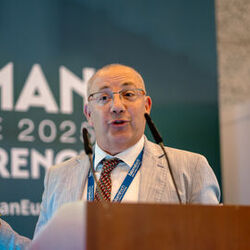
Falorni Tech |
|
A Research and Development partnership for digital innovation in the Glass IndustryTecsiglass Srl, headquartered in Genoa (Italy), launched some R&D innovative projects in partnership with the University of Genoa and the research Company Sirelab. Two major research pillars are the following:
CFD modelling is applied to some areas such as:
SpeakerDr. Francesca ZanchiSales DirectorTecsiglass
Tecsiglass |

JOIN OUR MAILING LIST
Be the first to hear about exhibitors, speakers and what's on at our upcoming events.